
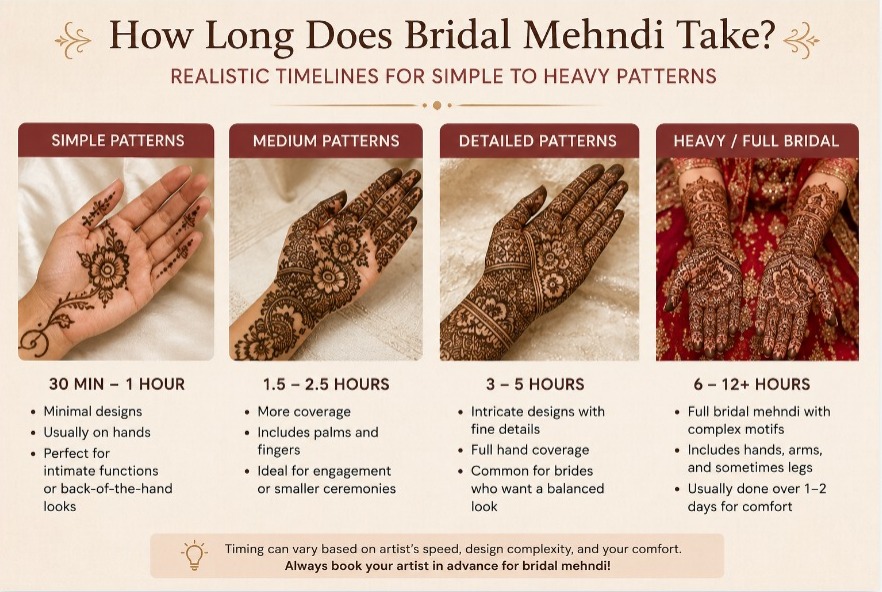
How Long Does Bridal Mehndi Take? Realistic Timelines for Simple to Heavy Patterns
Mehndi ArtistDiscover how much time you’ll need for beautiful bridal mehndi, from delicate designs to full, intricate patterns. Plan your special day better with our guide to realistic mehndi timelines for every bridal style.
A bride’s mehndi ceremony is much more than a pre-wedding ritual it is a cherished celebration of beauty, tradition, and the promise of new beginnings. As intricate henna patterns wind their way across hands and feet, the artistry of mehndi becomes a reflection of joy, love, and time-honoured customs. For brides, grooms, and wedding planners in India, understanding how much time to set aside for bridal mehndi is essential. The timeline varies greatly, influenced by the desired design, the experience of the artist, and personal preferences. Let us guide you through realistic bridal mehndi timelines so you can plan this beautiful experience with confidence.
The Significance of Mehndi in Indian Weddings
Mehndi holds a profound place in Indian weddings, symbolizing prosperity, happiness, and auspicious beginnings. The vibrancy of the henna design gracing the bride’s skin is not only decorative but also culturally rich, with each pattern and motif carrying its own meaning. As this ceremony brings together loved ones, music, and festivity, the bride’s mehndi becomes a visual centrepiece both on the day and in timeless photographs.
However, the creation of these remarkable designs requires careful planning. Allocating the right amount of time for the application is crucial to ensure a relaxed and enjoyable experience. Rushing through the process can affect the intricacy of the pattern and the final colour payoff, making it important to align your schedule with your chosen mehndi style.
Understanding Bridal Mehndi Styles and Their Timeframes
Bridal mehndi comes in many styles, each with its own level of detail and creative flair. From minimal, delicate touches to full, opulent patterns that cover the majority of the arms and legs, your choice of design will directly impact how much time you will need.
Minimal and Modern Designs
Modern Indian brides sometimes opt for contemporary or minimal mehndi designs. These styles focus on clean lines, negative spaces, and understated elegance, often highlighting the palms or back of the hands with light motifs, dainty vines, or simple geometric shapes. For such minimal bridal mehndi, expect the application process to take anywhere from one to two hours for both hands.
This style is ideal for brides who appreciate subtlety or are short on time, and it allows for an easy and comfortable experience, with less time spent in the artist’s chair. If you wish to extend these dainty designs to the feet, plan for an additional one hour, depending on coverage.
Traditional and Semi-Full Patterns
Traditional bridal mehndi blends intricate paisleys, florals, checks, and occasionally personalized elements such as the groom’s initials. Covering the palms, back of the hands, wrists, and sometimes trailing up to the mid-forearm, these designs require a more dedicated session.
For both sides of both hands up to the mid-forearm, a skilled mehndi artist typically takes around three to four hours. If you wish to include similar coverage for the feet, allocate another one and a half to two hours. Semi-full designs are perfect for brides seeking both elegance and a nod to tradition, allowing sophistication without extended sitting hours.
Full and Elaborate Bridal Mehndi
For the quintessential Indian bridal look, full and elaborate mehndi is a timeless choice. Such patterns are dense, detailed, and extend from fingertips to above the elbows, and from toes to above the ankles on the feet. Bridal motifs may include peacocks, bride and groom portraits, traditional jaali work, and delicate floral cascades, all interwoven to create a breathtaking masterpiece.
To achieve this level of artistry, plan generously. Application for both arms and both feet in this style can take six to eight hours, sometimes longer depending on complexity and the speed of the artist. It is common to divide the process over two comfortable sessions, especially if you want to avoid fatigue. This style is a beautiful testament to patience and tradition, and the result is always worth the wait.
Factors That Can Influence Mehndi Timelines
While the style and coverage are principal factors, other elements can influence the duration of your mehndi session.
The Experience of the Artist: Highly skilled artists can work with greater speed and precision, reducing overall time while ensuring quality and intricacy.
Personalization and Special Requests: Custom motifs and intricate personalization may add extra time, particularly when adding meaningful symbols, names, or portraits within the design.
Pre-Session Preparation: Clean, exfoliated skin without lotions or oils allows the mehndi to adhere better, aiding the artist and ensuring a smoother application.
Bride’s Comfort and Breaks: Comfort during the session is vital. Breaks for hydration, meals, or stretching can add to the total time required but help you remain relaxed throughout.
Weather and Environment: High humidity or cool temperatures can affect the drying time and comfort level, so choose a well-ventilated, pleasant location for your session.
Planning Your Mehndi Schedule with Confidence
Careful timing ensures that the mehndi is both beautiful and practical. Most brides prefer to schedule their mehndi one to two days before the wedding. This window allows the colour to develop to its richest hue by the main event, while still ensuring that the hands and feet are fresh and unblemished.
To plan smoothly, coordinate with your mehndi artist well in advance. Discuss your desired style, coverage, and any bespoke elements that may require extra time. Ask for a realistic estimate based on their past experience, and always factor in a small buffer for comfort and unforeseen needs. Arrange your other pre-wedding events and beauty routines with the mehndi session in mind, as you will need to limit movement during and immediately after application for best results.
Caring for Your Mehndi During and After Application
While time allocation for application is important, caring for the mehndi also plays a key role in its beauty. Once applied, allow each layer to dry completely before moving. After the design is finished, keep the paste on the skin for at least six to eight hours, or overnight for the deepest colour. Avoid washing your hands or feet with water directly after removing the dried paste traditional methods include gently scraping off the residue and applying natural oils to enhance the stain.
Prioritize relaxation during the session and surround yourself with close friends and family, turning the process into a cherished wedding memory.
A Timeless Ritual, Beautifully Timed
Bridal mehndi is a ritual woven with love, tradition, and artistry. Whether you desire a modern, minimal design or yearn for the grandeur of a full bridal pattern, thoughtful planning is the secret to a seamless and joyful experience. By understanding realistic application timelines and working closely with your chosen artist, you can enjoy every moment of this special ceremony and ensure dazzling, lasting beauty on your wedding day.
Let the rhythm of tradition and the expertise of artistry come together as you plan your bridal mehndi so you may enter your new beginning adorned with grace, elegance, and memories crafted in henna.