
How to Clean Your Wedding Lehenga at Home Without Ruining Embroidery
Makeup ArtistDiscover gentle at-home techniques to refresh your bridal lehenga while preserving its delicate embroidery. Learn how to care for your treasured ensemble so it stays as stunning as the day you wore it, all from the comfort of your home.
A bridal lehenga is more than just an outfit. It is a cherished memory, woven into fabric and adorned with intricate embroidery, that graces the happiest day of your life. After the festivities, preserving the beauty and freshness of this treasured ensemble is a thoughtful way to honor those memories. However, caring for a bridal lehenga, especially one with delicate embroidery, can seem daunting. Fortunately, there are gentle, effective techniques you can use at home to maintain its splendor, ensuring your ensemble remains as breathtaking as when you first wore it.
Understanding Your Bridal Lehenga’s Fabric and Embroidery
Every bridal lehenga is a harmonious blend of rich fabrics and exquisite handwork, be it zardozi, sequins, or thread embroidery. These elements require particular attention when it comes to cleaning and maintenance. Understanding the type of fabric—such as silk, net, velvet, or georgette—and the nature of the embroidery is essential before proceeding with any care or cleaning techniques. Embellishments used in Indian bridal couture are often delicate, which means standard wash practices are unsuitable for such attire.
The Importance of Gentle Handling
The key to preserving your lehenga lies in gentle, mindful handling. Rough movements, excessive rubbing, or careless storage can quickly damage embroidery and fabric. At-home care focuses on treating your garment with the same reverence with which it was created. This ensures the longevity of colors, the integrity of threadwork, and the sparkle of embellishments.
Refreshing Your Lehenga with At-Home Techniques
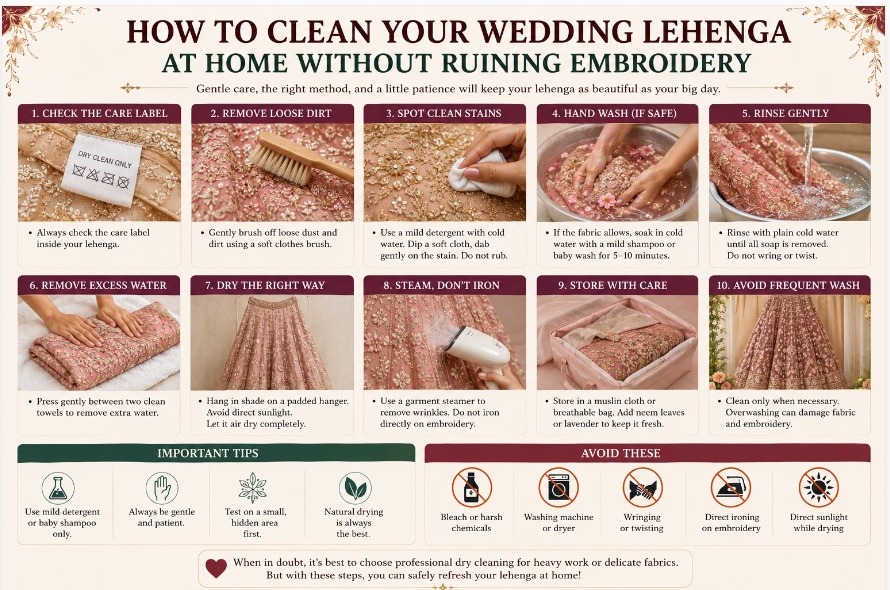
Refreshing your bridal lehenga doesn’t mean subjecting it to harsh soaps or water. Instead, mild and dry methods are recommended to revive its look without compromising on beauty. Begin by gently removing any surface dust with a soft-bristled brush. Always brush in the direction of the embroidery, not against it, to prevent snagging threads and sequins.
For fabrics harboring light odours from storage or the event, simply airing the lehenga in a shaded, well-ventilated area can do wonders. Avoid direct sunlight, as this may cause colors to fade or delicate elements to weaken over time. Allowing natural air to circulate will freshen the fabric without the risk of moisture damage.
Spot Cleaning Embroidered and Embellished Areas
In case you notice a minor stain or spill, immediate and careful action is vital. Take a clean, damp (not wet) cloth and gently blot the stain—never rub. Use only cold water, as warm or hot water can set stains, making them more difficult to remove. If extra care is necessary, a few drops of a mild, embroidery-safe liquid detergent can be diluted in water and applied using a cotton swab. Test on an inconspicuous area first to ensure there’s no reaction. After blotting, immediately dry the spot with a soft, clean towel.
Never use bleach, strong chemicals, or abrasive cloths, as these can damage the embroidery and fabric. If in doubt or if the stain is persistent, it is best to avoid further at-home treatment and consult a professional specializing in ethnic wear care.
Dealing with Wrinkles and Fabric Limpness
After your wedding, your lehenga may develop creases or lose some of its original shape. To gently restore its freshness, carefully hang the lehenga on a wide, padded hanger to avoid tearing any stitched details. For light wrinkles, use a hand-held steam iron at a safe distance, ensuring it never directly touches the embroidery. Hold the steamer about six to eight inches away, and move it in small sections. This will allow the fabric to relax and regain its natural fall without flattening or damaging the embellishments.
If you do not have a steamer, you can hang the lehenga in your bathroom while running a hot shower. The steam in the room will help ease out wrinkles. Make sure the lehenga itself remains dry and does not come into contact with water droplets.
Careful Storage for Long-lasting Beauty
Proper storage plays a significant role in keeping your bridal lehenga stunning for years to come. Always store your lehenga in a breathable, muslin cloth cover, which provides protection against dust and allows air circulation. Avoid plastic covers, as they can trap moisture, leading to mildew or a musty smell.
Lay the lehenga flat if possible, or fold it gently along natural creases, placing soft tissue paper or muslin between layers to prevent embroidery from rubbing against itself. Store the outfit in a cool, dry area away from harsh sunlight and humidity. Remember to periodically unfold and refold the lehenga along different lines to prevent deep creases from setting in.
Refreshing Details: Dupatta and Choli Care
Often, the dupatta and choli carry as much intricate embroidery as the skirt. These pieces require similar care. For the dupatta, gently shake out dust and use a soft cloth to remove minor blemishes or loose particles. Store the dupatta unfolded in a muslin sleeve, draped to avoid the weight of embellishments gathering in one place, which could cause stretching.
The choli, being closely fitted, can retain body oils or makeup marks. Address these by dabbing gently with a dampened cotton pad and mild detergent if needed, and allow it to air dry thoroughly before storing. Always fasten hooks and buttons so that their points do not snag the delicate fabric.
Preserving Sentiments Through Care
Your bridal lehenga is not only an investment but also a symbol of cherished memories and family tradition. Caring for it with patience and the right techniques allows you to revisit its splendour for years—perhaps even passing it down as a heritage piece or wearing it for future family occasions.
By using these gentle, at-home methods, you can refresh your bridal lehenga and ensure its delicate embroidery remains pristine. Each step, from mindful cleaning to thoughtful storage, preserves the craftsmanship that made your wedding truly unforgettable. Treating your ensemble with this level of care is a tribute to both the artistry it embodies and the joyous moments it represents.