
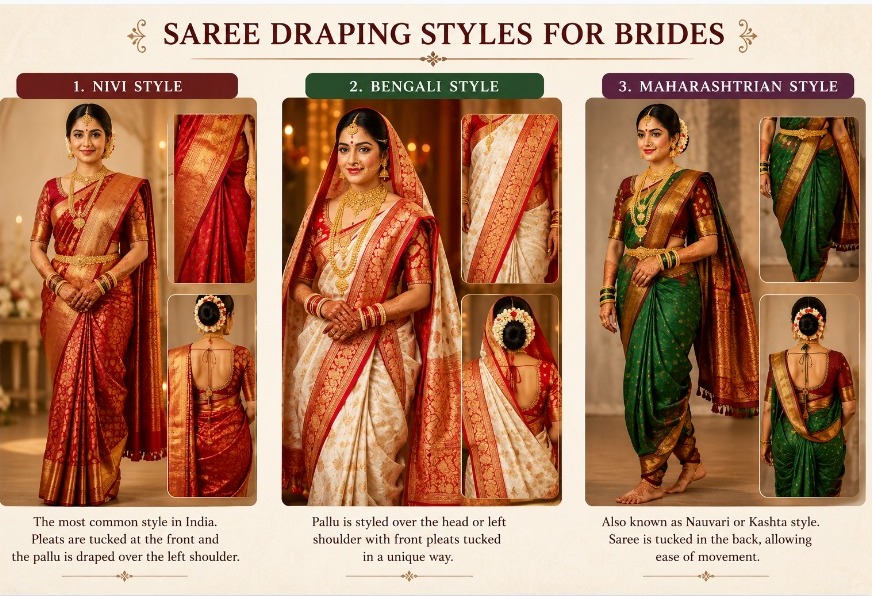
Saree Draping Styles for Brides: Nivi, Bengali, Maharashtrian
Makeup ArtistDiscover stunning saree draping inspirations for your big day, from timeless South Indian elegance to bold Bengali and Maharashtrian traditions. Elevate your bridal look with unique styles that celebrate heritage and individuality, ensuring you shine as the quintessential Indian bride.
The saree is an eternal symbol of Indian bridal tradition, weaving together threads of culture, grace, and identity. For generations, brides across the country have turned to this six yards of splendour to capture the grandeur of their special day. Beyond the allure of colours and fabrics, the art of draping adds a distinctive touch, echoing age-old customs while embracing personal style. If you are seeking inspiration for your wedding ensemble, discover how timeless South Indian aesthetics, bold Bengali statements, and striking Maharashtrian intricacies can elevate your look, making you an unforgettable bride.
The Essence of South Indian Elegance
South Indian saree draping is renowned for its understated sophistication and regal allure. Brides from this region often choose rich silks, favouring timeless hues of gold, red, and temple motifs. The quintessential South Indian drape, known for its classic pleats and pallu arranged over the shoulder, ensures a graceful silhouette that pays homage to tradition.
One of the most admired inspirations is the Madisar style, primarily embraced by Tamil Brahmin brides. The intricate technique transforms a single saree into a structured, almost sari-cum-dhoti ensemble, offering both comfort and singular elegance. The pleats at the front and the back create unique layers, allowing for effortless movement during sacred rituals.
For those partial to Kerala traditions, the Mundum Neriyathum drape celebrates purity with a simple, two-piece costume paired with jasmine garlands and heirloom gold jewellery. This look is both refined and welcoming, making the bride the very epitome of grace.
Embracing Bold Bengali Statements
Bengali bridal saree draping commands attention with its dramatic flair. Brides often wear the traditional red and white saree, favouring thick borders and opulent fabrics like Benarasi silk. The signature Bengali style is distinguished by its wide box pleats and the pallu, elegantly thrown over the left shoulder and gracefully looped back under the right arm.
What sets the Bengali drape apart is the way the pallu frames the body while allowing for intricate blouse designs to shine. Many Bengali brides also accentuate this look by tucking a bunch of keys or traditional ornaments at the waist, symbolising their new responsibilities. The powerful statement of the saree is often enhanced by bold sindoor application and elaborate headpieces, embracing both heritage and individuality.
This vivacious style brings movement and life to every step you take, ensuring that each ritual is celebrated with confidence, pride, and a distinct cultural identity.
The Striking Art of Maharashtrian Drapes
Maharashtrian saree draping has its own unique allure, setting it apart from conventional styles. The Nauvari saree, also known as the nine-yard saree, lends itself to a dhoti-like silhouette, a look deeply rooted in the region’s warrior past. This saree is usually draped without a petticoat, offering both utility and comfort, perfect for the myriad ceremonies and dance-filled celebrations that mark a traditional Maharashtrian wedding.
The process begins by wrapping the saree around the waist, passing the fabric between the legs, and tucking it neatly at the back. The pallu is then elegantly draped over the shoulder, often styled to resemble a cascading waterfall. Flower-adorned braids, traditional nose rings, and green glass bangles enhance this powerful yet feminine look.
The boldness of the Nauvari saree reflects a bride who is both rooted in tradition and ready to embrace her new journey with grace and strength. Its practicality ensures ease during elaborate rituals, while the overall effect is that of stately magnificence.
Modern Interpretations of Traditional Drapes
As Indian weddings embrace individuality, many brides are choosing to reinterpret classic draping styles. Mixing regional drape techniques allows you to pay homage to your heritage while expressing your unique sense of style. Fusion drapes, such as pairing a South Indian saree with a Bengali pallu arrangement, or incorporating a Maharashtrian twist into a Kanjeevaram, can create a look that is deeply personal yet profoundly traditional.
Textile choices also play an important role in transforming the overall effect. Lighter fabrics such as organza or georgette lend themselves well to contemporary silhouettes, while the weight and fall of traditional silks enhance the drama of more structured drapes. Accentuating with modern blouses, statement jewellery, and unconventional pleat placements or pallu trails instantly updates the timeless ensemble.
Choosing the Right Saree Draping Style for Your Wedding
Selecting the right draping style for your bridal saree is a deeply personal decision, informed by family traditions, comfort, and the wedding’s unique setting. Consider the rituals you’ll be performing on the big day, the season, and how much movement the function demands. Timeless South Indian drapes are perfect for temple weddings and rituals that call for grace and serenity. A bold Bengali drape makes a striking impression at vibrant celebrations and grand entrances. The practicality of the Nauvari lends itself beautifully to multi-day Maharashtrian festivities or dance-led sangeet nights.
Pay thoughtful attention to accessories and hairstyle, as the overall impact of your saree relies on harmonious elements. Jasmine flowers, temple jewellery, elegant waistbands, headpieces, and traditional bangles can selectively elevate the entire ensemble. Above all, confidence is your greatest accessory—a drape that feels effortless will make every step lighter and every ritual more memorable.
Celebrating Heritage and Individuality
Your wedding day is the culmination of stories old and new, a celebration of cultural legacy and personal dreams. The saree, with its infinite versatility, invites you to honour your roots while making a statement that is uniquely your own. Whether you choose the serenity of South Indian elegance, the drama of Bengali draping, or the commanding grace of Maharashtrian styles, your bridal look will reflect both tradition and trailblazing spirit.
In embracing both classic and reinvented draping methods, you celebrate not just the richness of India’s textile heritage, but your own journey as a bride. Let your saree become the canvas, and the drape, the brushstroke of individuality—ensuring you shine with beauty, grace, and a story to remember on your special day.