
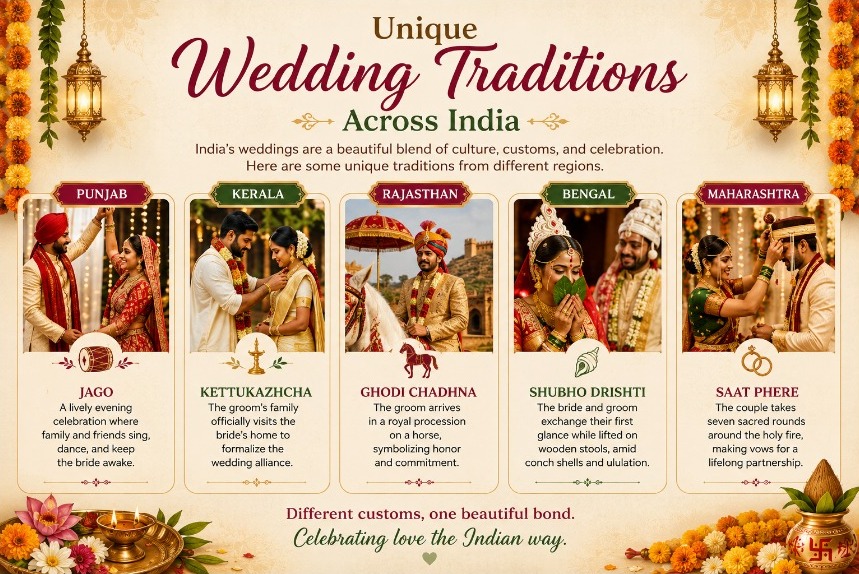
Unique Wedding Traditions Across India
GeneralDiscover the beauty of diverse Indian nuptial customs, from vibrant rituals to heartfelt ceremonies, celebrated across the country. Explore meaningful traditions that add charm and significance to weddings, inspiring you to create a celebration that reflects your heritage and love story.
Within the kaleidoscope of Indian culture, weddings are among its most dazzling celebrations. Each region, faith, and family brings its own history and heartfelt traditions, weaving together a vibrant tapestry of customs that honor love, unity, and heritage. The beauty of Indian nuptials lies not only in their grandeur but also in the deeply meaningful rituals that surround every union, reflecting centuries-old beliefs and binding families together. Exploring these diverse customs is an inspiring journey, one that helps couples create a wedding experience that is personally significant and rich in tradition.
A Tapestry of Regional Diversity
India’s vast geography and multicultural fabric have given rise to countless wedding rituals, each suffused with symbolic gestures and artistic expression. In the north, you may witness the elaborate Mehendi drawn on the bride’s hands, a pre-wedding celebration marked by music and laughter, while in the south, the sacred tying of the Mangalsutra necklace signifies the solemn promise of marriage. In the east, Bengali brides arrive adorned in red and white, carried in a ‘piri’ a ceremonial stool reflecting playfulness and familial blessings, while in western Gujarat, the lively Garba dance fills the night before vows are exchanged.
The unity in these diverse customs lies in their purpose: bestowing blessings, celebrating family bonds, and invoking spiritual grace for the future of the couple. Whether expressed through the vibrant colors of attire, the aroma of traditional cuisines, or the melodic rhythms of native music, each ritual adds a unique flourish to the wedding’s narrative.
Mehendi and Haldi: Embracing Joy and Tradition
Some pre-wedding rituals are cherished across communities, though each region adds its own signature touch. The Mehendi ceremony in particular is beloved for its beauty and meaning. Intricate henna designs are applied to the bride’s hands and feet, believed to bring luck, protect against evil, and deepen the bond between spouses. Family members and friends gather, turning the occasion into a celebration of artistry and affection.
Similarly, the Haldi ceremony is marked by the application of turmeric paste to the bride and groom. This ritual, observed in various forms across India, is both purifying and protective, symbolizing a fresh, radiant start as the couple approaches their wedding day. It is a joyful moment, filled with laughter, shared stories, and familial love, setting a warm and auspicious tone for the union to come.
The Sacred Wedding Vows
Central to every Indian wedding are the vows taken by the bride and groom, each community expressing them in its own powerful way. In Hindu weddings, the seven rounds around the holy fire—Saptapadi—represent seven vows of partnership, trust, and lifelong commitment. For Sikh couples, the Anand Karaj ceremony involves four hymns (Laavan) that speak of spiritual union and mutual growth, a reminder that marriage is a journey of both devotion and companionship.
Muslim weddings, known as Nikah, are sanctified by the spoken vows (Ijab-e-Qubool), with both bride and groom expressing their consent before witnesses. This simplicity is deeply meaningful, centering the couple’s free will and the blessings of the community. In Christian churches across India, exchanging rings and reciting promises before God and loved ones marks the sacred nature of their commitment.
Rituals of Blessings and Farewell
Indian weddings are incomplete without the heartfelt blessings of elders. In North Indian ceremonies, the Kanyadaan ritual, where the bride’s parents formally entrust their daughter to her new family, is a poignant expression of love and trust, often accompanied by blessings and gifts. In southern traditions, rituals like Kansar-Bhakar or Saptapadi highlight partnership and respect, sealing the couple’s bond with shared prayers and symbolic gestures.
The Bidaai, or farewell, is among the most emotional moments, marking the bride’s transition from her parental home to a new phase of life. The parting rituals, whether accompanied by songs, tears, or whispered blessings, capture the essence of Indian weddings—joy interwoven with heartfelt sentiments, honoring both beginnings and cherished bonds.
Celebrating with Song, Dance, and Feast
No Indian wedding is complete without vibrant music and joyous dancing. In Punjab, the Bhangra and Giddha fill the festivities with boundless energy. In Maharashtra, the traditional Lezim dance weaves everyone into the celebration, while the South’s classical performances add grace and elegance to the occasion. These spirited performances are not merely entertainment—they are expressions of collective happiness, inviting all to join in the couple’s joy.
The wedding feast too is a celebration of regional flavors and familial hospitality. Elaborate spreads, often featuring generations-old recipes, symbolize abundance and prosperity. Each community showcases its culinary heritage, offering guests a sensory journey through the tastes of tradition and love.
Meaning and Modern Inspiration
While Indian weddings are steeped in custom, many couples today are inspired to blend tradition with their own love stories. Incorporating family rituals, meaningful heirlooms, or unique ceremonies can help couples honor their roots while adding personal significance to their celebrations. From bespoke sangeet nights to themed rituals that reflect shared passions, there is beauty in embracing both heritage and individuality.
Wedding planners and families increasingly find inspiration in these diverse customs, crafting ceremonies that are both timeless and uniquely reflective of the couple’s journey. Whether through subtle details or grand gestures, every meaningful tradition adds depth and charm to the marriage festivities.
A Heritage to Cherish
Indian nuptial customs continue to captivate with their color, emotion, and enduring significance. They remind us that weddings are more than a union of two people they are the coming together of families, communities, and values passed down through generations. By discovering and celebrating the diversity of these cherished traditions, each couple can create a wedding that not only reflects their heritage but also celebrates the promise of a beautiful future together.
With every ritual and blessing, Indian weddings become a joyous ode to love, togetherness, and the rich legacy that shapes every new beginning.