
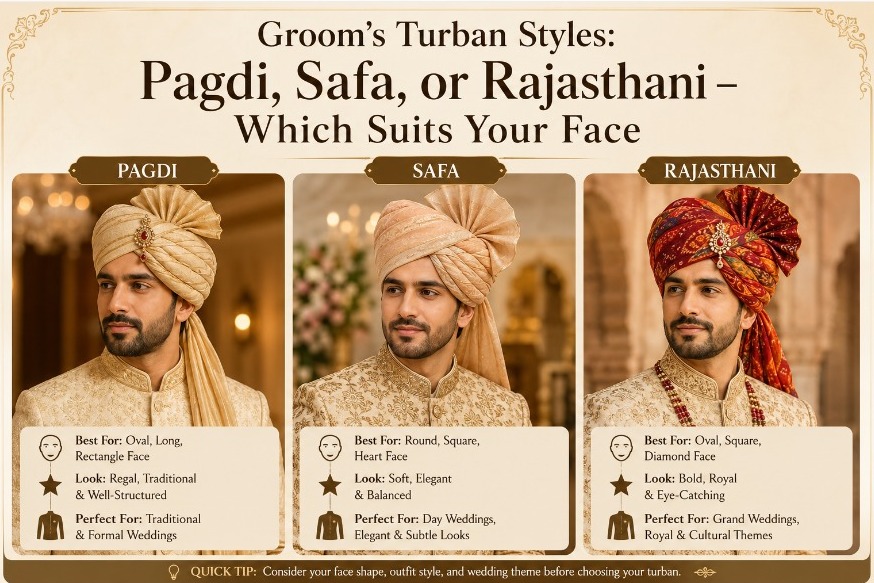
Groom’s Turban Styles: Pagdi, Safa, or Rajasthani Which Suits Your Face
GeneralDiscover how to choose the perfect traditional headgear for your big day. Explore classic turban styles and find out which suits your face shape best, ensuring you look regal and confident as you make your grand entrance.
Your wedding day is a celebration of love and tradition, a gathering where every detail speaks of culture, pride, and personal style. Among all the elements that complete a classic Indian bridal look, traditional headgear holds a position of honor. A turban or pagri is much more than an accessory; it is a symbol of legacy, dignity, and festivity. Choosing the ideal turban not only signifies respect for customs but also enhances your confidence and presence as you embark on a new journey. Understanding the nuances of traditional headgear can ensure you select one that flatters your features and feels authentically yours.
The Significance of Traditional Indian Headgear
In Indian weddings, the groom’s turban is steeped in heritage. It represents valor, respect, and familial pride. For generations, turban tying has been a revered ritual a moment when elders grace the groom with wisdom and blessings. The headgear also unifies the wedding party, as close friends and relatives don similar styles, underscoring a sense of community.
Each region across India brings its own unique headgear variations. Depending on your roots and rituals, you might encounter the stately Safa from Rajasthan, the colorful Pheta from Maharashtra, the elaborate Mysore Peta of the South, or the elegant Pagdi from Punjab and Gujarat. These styles are distinct in their fabric choices, methods of tying, and embellishments, yet all embody the grandeur of a wedding procession.
Classic Turban Styles for Every Groom
The diversity of Indian headgear invites you to express tradition while highlighting your individuality. Key styles that remain evergreen at weddings include
Rajasthani Safa: Vibrant, often made with Bandhej or Leheriya prints, these safas are known for their dramatic flair. Their long tails and rich colors suit grand occasions and look especially majestic during open-air baraat events.
Maharashtrian Pheta: Characterized by a pointed crest, the pheta features bold hues and contrasting borders. It brings a bold, upright silhouette, befitting both elaborate and intimate wedding settings.
Punjabi Pagdi: The subtle elegance of a Punjabi pagdi stands out through its simplicity. Usually adorned with minimal embellishments, it offers sophistication and a dignified profile.
Mysore Peta: This southern classic exudes regality with its angular folds and delicate brocade. Gold borders and deep jewel tones complement traditional South Indian attire.
Gujrati Pagdi: With its slightly conical crown and structured layering, the Gujarati pagdi makes a statement that is both refined and festive.
When selecting your turban style, consider not only your ancestral traditions but also what feels true to your personality. Brides and wedding planners can help coordinate the look with the wider wedding theme and color palette.
Choosing the Right Headgear for Your Face Shape
While tradition is a guiding light, choosing a turban that suits your face shape can greatly enhance your overall appearance. The interplay of volume, height, and angle can effortlessly bring harmony to your features and create a striking silhouette as you make your entrance.
Round Face
If you have a round face, opt for turban styles that add height at the crown. Avoid overly voluminous or wide shapes, which can further emphasize roundness. Styles with a tapering peak, such as the Maharashtrian Pheta or those with gentle vertical folds, add elegance and elongate the visage. Choosing a slightly angular wrap can create a slender, regal effect.
Oval Face
Oval faces are versatile and carry most turban styles gracefully. Both minimalistic and elaborate headgears, such as the Mysore Peta or Rajasthani Safa, will suit this shape. You have the freedom to experiment with patterns, layers, and accessories. If you wish to emphasize your features, a moderate width with a well-defined central peak works beautifully.
Square Face
A square jawline is complemented by softer, rounded turban styles that offset the strong lines of the face. Consider turbans with gentle drapes and curves, such as softer wraps on the Safa or more loosely tied pagdis. Avoid excessively structured or boxy designs, as they can accentuate angularity. Embellishments placed towards the center can draw focus and achieve visual balance.
Rectangular or Long Face
For longer face shapes, select headgear with width and fullness at the sides or temples. The Gujarati or Punjabi pagdi, with their layered structure and horizontal emphasis, bring symmetry and soften elongation. Avoid turbans that sit too high or too vertical, which can further lengthen your appearance. Fabrics with intricate patterns or borders at the base of the turban break vertical lines and add a stately presence.
Heart-Shaped Face
Narrow chins and broad foreheads pair well with turban styles that balance proportions, such as angled wraps that flare slightly at the sides. Delicate embellishments or kalgis placed lower help draw attention downward, creating a harmonious frame. Underscore this with softer folds or gentle pleats at the sides.
Coordinating Your Headgear with Wedding Attire
After choosing the most flattering turban style, turn your attention to fabric, color, and embellishments that best complement your wedding ensemble. Harmonize the hues with your sherwani or outfit—whether you prefer bold contrasts or subtle, tonal layers. Silk, brocade, cotton, and velvet are favored for their traditional appeal and comfortable wear. Consider the season and your comfort, especially if your celebrations span several hours.
Ornamental touches, such as brooches, feathers, or a kalgi, can add a royal accent. The ornamentation should enhance the overall look without overwhelming your attire. For a coordinated wedding party, complimentary patterns or synchronized color accents bring an air of refinement to group photos and processions.
The Importance of a Perfect Fit
Wearing a turban that fits flawlessly is essential for all-day comfort and poise. Custom-tied turbans are preferred for their precise craftsmanship, but ready-made options offer convenience for large gatherings or quick changes. Ensure the headgear sits securely, neither too tight to cause discomfort nor too loose to shift during ceremonies or festivities. Trial fittings in advance help you find the perfect fit while giving you an opportunity to practice wearing and carrying your headgear gracefully.
Making Memories with Your Headgear Ritual
The tradition of tying the wedding turban is often a highlight before the festivities begin. Whether performed by a respected elder or a trusted friend, this ritual marks the transition from fiancé to groom with warmth and emotion. Embrace this moment, allowing yourself to feel both the solemnity and joy it brings. These are the details that weave stories for a lifetime, captured in both memory and photographs.
Your Grand Entrance, Redefined
As the wedding day unfolds, your carefully chosen headgear is more than a style statement. It completes the story of your heritage, individuality, and aspirations. By selecting a turban that harmonizes with your tradition, suits your face shape, and aligns with your wedding vision, you step forward with confidence and charm.
On this most significant day, let your traditional headgear reflect both legacy and personal expression. With thoughtful consideration and a touch of regal splendor, you are assured of making an entrance that is not just grand, but truly unforgettable.